
Jakarta – In recent years, the Indonesian nickel industry has experienced rapid growth. Significant investment, capacity expansion, and a push for downstream processing have made Indonesia a key player in the global critical mineral supply chain. However, like other commodity sectors, growth in the nickel industry also faces a number of fundamental challenges.
These include slowing electric vehicle growth, a temporary oversupply due to the expansion of RKEF and HPAL technologies, and recent adjustments to Indonesian policies and regulations. These conditions have led to a decline in nickel prices. However, many industry players view this situation not as a crisis, but rather as a normal market correction.
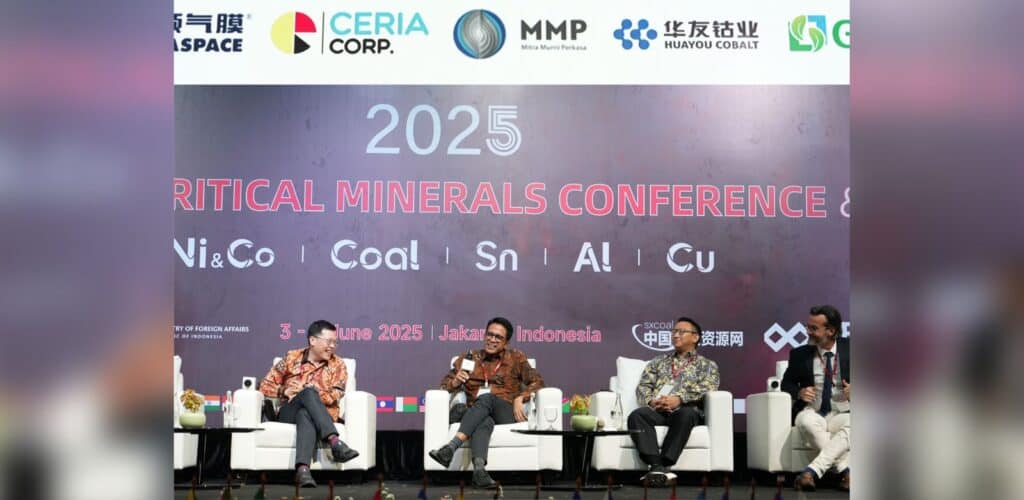
This view was expressed by PT Mitra Murni Perkasa (MMP) Finance Director Achmad Zuhraidi in the CXO Panel session entitled "Corporate Visionaries Chart Courses for Critical Mineral Evolution in Indonesia" at the Indonesia Critical Minerals Conference and Expo 2025 held at the Pullman Hotel Jakarta, from June 3-5. In the forum, Achmad shared MMP's views on the direction of the industry, the company's adaptation strategy, and the importance of building a resilient business model in the face of market fluctuations. According to him, the current decline in nickel prices is part of the natural cycle of commodities. After several years driven by the surge in demand for electric vehicles and the growth of the battery industry, the market is now undergoing a recalibration.
"This mismatch between supply and demand does put cost pressure on producers, but it also serves as a market filter that values flexibility, efficiency, and integration," he said.
Flexibility to meet challenges
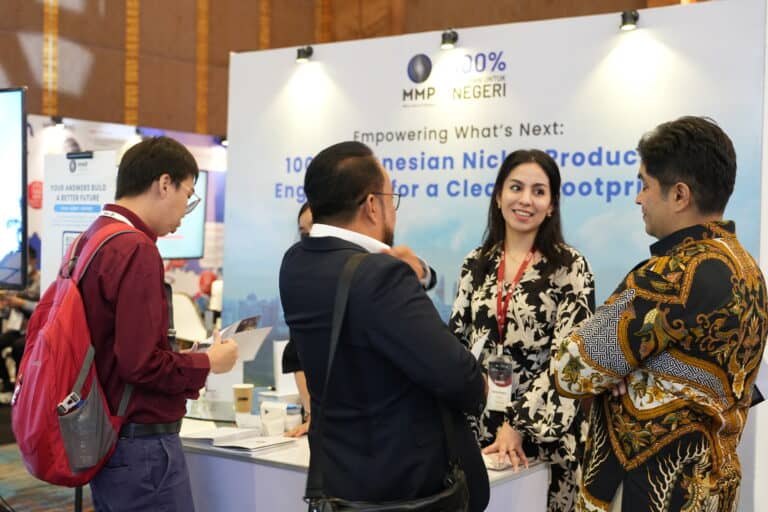
To address this challenge, MMP built a smelter facility designed with high flexibility in mind. Rather than focusing solely on a single product type, MMP's smelting facility allows the company to adjust production according to market dynamics. This gives MMP the flexibility to adapt production to market dynamics. This allows the company to focus on products that offer the best margins in any given situation. He also emphasized that this flexibility is not merely a short-term strategy but part of a long-term vision to build strong competitiveness.
“Kemampuan beradaptasi semacam ini tidak hanya memaksimalkan potensi arbitrase harga, tetapi juga menjadi fondasi penting bagi ketahanan dan daya saing jangka panjang di industri nikel,” ujarnya.
Strengthen the supply chain through strategic pillars
Furthermore, MMP believes that the sustainability of the nickel industry is highly dependent on the strength of the supply chain. In this regard, he emphasized that there are three main pillars that form the foundation for building a resilient national nickel supply chain. First, market alignment. According to him, the government's downstream strategy has brought Indonesia into the forefront of the global nickel value chain. However, as the economy moves downstream, it is crucial to strengthen the overall value chain by ensuring that investment and industrial development are increasingly directed toward activities with higher economic multipliers, such as processing, refining, and manufacturing.
"This shift supports long-term competitiveness and deepens Indonesia's industrial base, creating broader economic benefits beyond extraction," he explained.
Second, Policy stability. As the national industry begins to shift from upstream extraction to downstream processing, maintaining policy certainty is crucial. Consistency in benchmark pricing and investment policies will help maintain investor confidence. This can also support the long-term vision of moving value creation closer to where margins and economic multipliers are greater, namely downstream. Ketiga, integrasi Environmental, Social, and Governance, (ESG). Keberlanjutan bukan hanya tentang metrik lingkungan, melainkan tentang ketahanan operasional dan sosial.
"We consistently align our company's operations with international ESG standards. This is not just a requirement, but also because it strengthens our long-term operations, ensures traceability, stakeholder trust, and access to capital," he explained.
Building industrial independence and sustainable supply chains
As one of the nickel smelters matte In Indonesia, which is entirely funded by domestic investors, MMP has successfully positioned itself as concrete evidence of the strength of the national industry. Regarding this, he explained that its status as a domestically-invested company provides MMP with unique flexibility in implementing its business strategy. He stated that while funding and risk mitigation challenges remain, the 100% domestic investment status provides flexibility in strategic decision-making and accelerates project implementation.
In addition to discussing capital aspects, he also emphasized that ESG principles are an integral part of MMP's operations. ESG encompasses not only environmental issues but also reflects operational and social resilience. Therefore, he views ESG implementation as crucial for ensuring supply chain traceability and building trust. stakeholder, as well as opening access to broader financing
"We align our operations with international ESG standards because this is not just a requirement, but also strengthens our business as a whole. ESG principles need to be implemented in a measured and realistic manner to ensure a sustainable energy transition," he said.